
Best Daily Study Mistakes Students Make and How to Avoid Them :
Best Daily Study Mistakes Students Make and How to Avoid Them
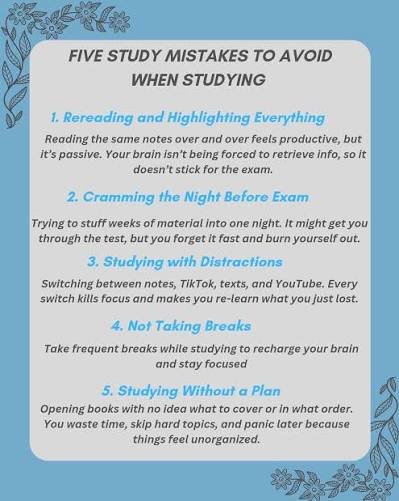
Every student wants better grades, improved focus, and faster learning. However, many students unknowingly make daily study mistakes that reduce productivity and make learning harder than it needs to be. The good news is that these mistakes are easy to fix with the right habits.
In this article, you’ll discover the most common daily study mistakes students make and practical strategies to avoid them.
1. Studying Without a Plan
One of the biggest mistakes students make is sitting down to study without knowing what they need to accomplish. This often leads to wasted time and poor concentration.
How to Avoid It
- Create a daily study schedule.
- Write down 2–5 tasks before you start.
- Prioritize difficult subjects first.
- Set realistic study goals.
Example: Instead of writing “Study Science,” write “Complete Chapter 5 notes and solve 20 MCQs.”
2. Using the Phone Too Often
Social media notifications and constant phone checking break concentration. Even a quick look at your phone can interrupt your focus for several minutes.
How to Avoid It
- Turn on Do Not Disturb mode.
- Keep your phone away from your study desk.
- Use focus apps if necessary.
- Reward yourself with a short phone break after completing a study session.
3. Studying for Hours Without Breaks
Long study sessions may feel productive, but your brain becomes less efficient over time.
How to Avoid It
Try the Pomodoro Technique:
- Study for 25–50 minutes.
- Take a 5–10 minute break.
- After four sessions, take a longer break of 20–30 minutes.
Short breaks improve focus and reduce mental fatigue.
4. Only Reading Instead of Practicing

Simply reading textbooks creates the illusion that you’ve learned something. Real learning happens when you actively use the information.
How to Avoid It
- Solve practice questions.
- Teach the topic to someone else.
- Write summaries in your own words.
- Use flashcards and quizzes.
Active learning helps improve long-term memory.
5. Ignoring Difficult Subjects
Many students spend most of their time on subjects they already enjoy while avoiding the harder ones.
How to Avoid It
- Study challenging subjects when your energy is highest.
- Break difficult topics into smaller sections.
- Practice consistently instead of avoiding them.
Remember: Improvement comes from working on your weaknesses.
6. Not Reviewing What You Learned

Learning something once isn’t enough. Without revision, most information is forgotten within days.
How to Avoid It
Use spaced repetition:
- Review after one day.
- Review again after one week.
- Review once more after one month.
Regular revision strengthens memory and boosts exam performance.
7. Multitasking While Studying
Listening to unrelated videos, chatting with friends, and studying at the same time reduces your brain’s ability to retain information.
How to Avoid It
- Focus on one subject at a time.
- Close unnecessary browser tabs.
- Create a distraction-free study environment.
Single-tasking is more effective than multitasking.
8. Sleeping Too Little
Many students sacrifice sleep before exams, believing it gives them more study time. In reality, poor sleep weakens memory and concentration.
How to Avoid It
- Sleep for 7–9 hours each night.
- Maintain a consistent bedtime.
- Avoid screens at least 30 minutes before sleeping.
Your brain processes and stores information while you sleep.
9. Comparing Yourself to Others
Comparing your progress with classmates can reduce motivation and increase stress.
How to Avoid It
- Focus on your own improvement.
- Track your daily progress.
- Celebrate small achievements.
Success is about becoming better than you were yesterday.
10. Studying in a Messy Environment

A cluttered desk can make it difficult to concentrate.
How to Avoid It
- Keep only essential study materials on your desk.
- Ensure good lighting.
- Use a comfortable chair.
- Organize your notes regularly.
A clean workspace helps create a focused mind.
Bonus Tips for Better Daily Study Habits
- Set daily learning goals.
- Stay hydrated.
- Eat healthy snacks.
- Exercise regularly.
- Revise every day.
- Practice previous years’ questions.
- Track your study time.
- Reward yourself after completing tasks.
Final Thoughts
Everyone makes study mistakes, but successful students learn to recognize and correct them. Small improvements in your daily study routine can lead to better concentration, stronger memory, and higher exam scores over time.
Instead of studying harder, focus on studying smarter. By avoiding these common mistakes and building consistent habits, you’ll become a more effective learner and achieve your academic goals with less stress.
Frequently Asked Questions (FAQs)
1. What is the biggest study mistake students make?
Studying without a plan and allowing distractions like smartphones are among the most common mistakes.
2. How long should I study without taking a break?
Most students benefit from studying for 25–50 minutes followed by a 5–10 minute break.
3. Is studying every day better than studying for long hours occasionally?
Yes. Daily, consistent study sessions improve memory retention and reduce exam stress.
4. How can I remember what I study?
Use active recall, spaced repetition, practice questions, and regular revision instead of just rereading your notes.
5. Can sleep improve my academic performance?
Absolutely. Getting 7–9 hours of quality sleep helps your brain store information, improves concentration, and enhances problem-solving skills.